
One event needs one usable route. A booth sign, invitation or search result should not send visitors through the general homepage to discover the event details. Give them one German page that answers the next practical question.
Choose the right page: event or market
A dedicated event page makes sense when one fair, congress or exhibition has a defined date, venue, audience and offer. It can be linked from invitations, the exhibitor profile, social posts and a QR code at the booth. A broader German market page is better for year-round discovery and can link to several current events.
Do not publish a page that looks like a confirmed event if the date, venue or exhibitor status is not final. Update or archive event information when the show is over; keep evergreen product and contact pages useful.
Before the fair: answer the appointment question
German visitors often want to know whether a conversation will be relevant before they reserve time. Put the decision-making information near the top:
- What is shown: products, use cases, service scope or a specific launch.
- Who should come: purchasing, engineering, distributors, project partners or another defined audience.
- Where and when: official event name, date, venue, hall or booth details once confirmed.
- Why meet: the question or outcome the conversation can address.
- How to book: a short form, calendar connection or contact route with a realistic response expectation.
Keep the exhibitor's home-country location visible. A German page should remove uncertainty about language, delivery area and who follows up; it does not need to pretend the company is based in Germany.
At the booth: let the QR code do one job
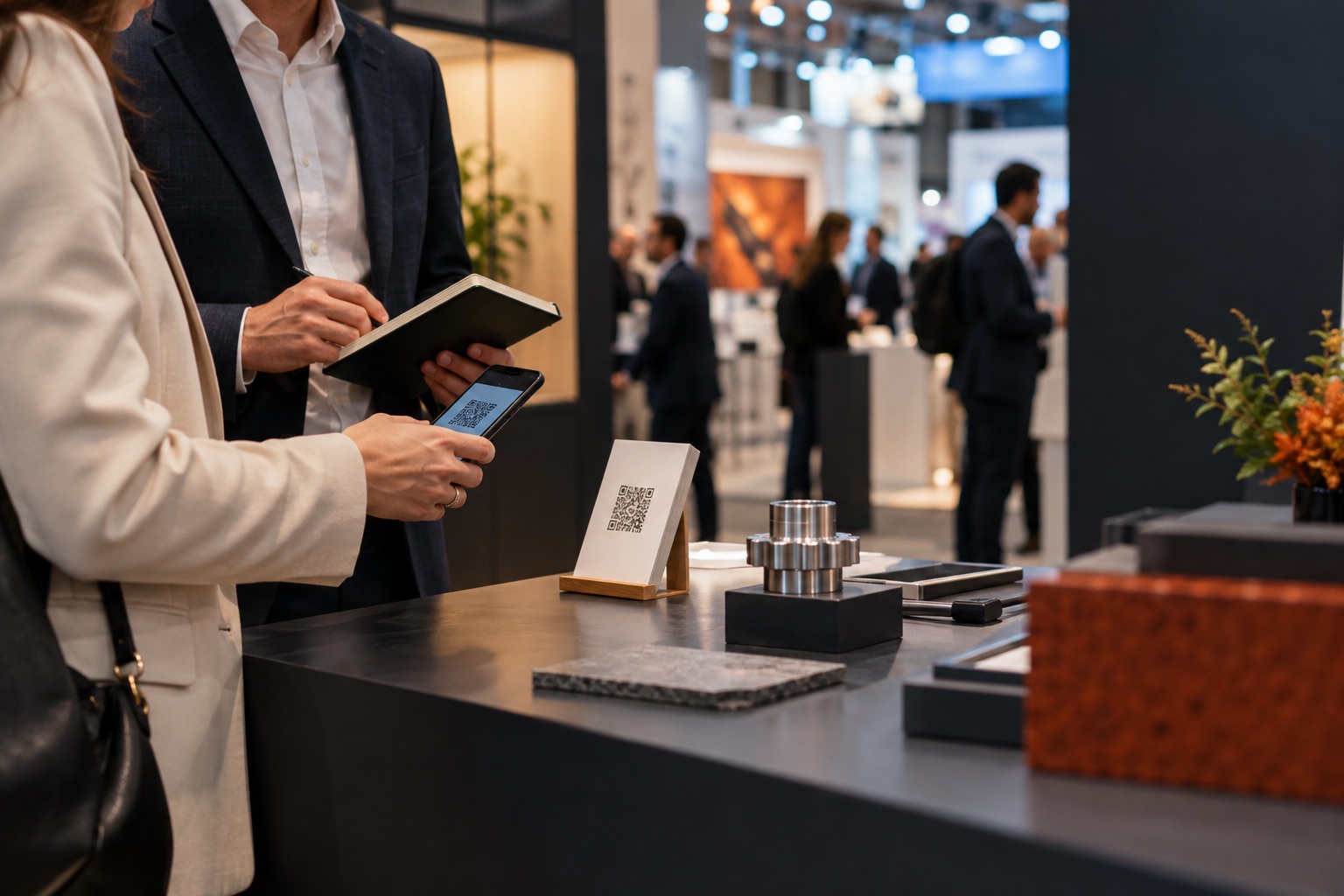
A QR code works better when its promise is specific. “Technical documents”, “book a follow-up” and “request the product sheet” are different tasks. The landing page should open directly at the promised task, load well on a phone and make the next action obvious.
Short route, useful context.
Show the event, company, offer and one next action first. Add a concise product or service overview, contact person and downloadable material below.
Capture enough to prepare.
Ask what the visitor is looking for, their organisation, timing and preferred follow-up. Make optional files and the privacy information clear.
After the fair: keep the promise visible
The page can support follow-up without claiming that a scan equals a qualified lead. State what happens after a request, who replies and which material may be sent. If contacts are collected, use a transparent purpose, an appropriate consent route where required and a retention process that the responsible company can actually operate.
Connect the event route to product pages, technical documents, references and a general contact path. That makes the page useful after the hall closes instead of leaving a short-lived campaign without context.
Search and event data: use only what the page proves
Use a descriptive title, the real event name, a self-canonical URL, clear headings, internal links and the event's actual date and location when confirmed. Google describes Event structured data for pages about a single event with visible event details. This guide is an Article, not an event listing; its structured data therefore describes the guide instead of inventing an event.
Structured data cannot create an event, a booking or a ranking. It only helps systems interpret information that is already visible and accurate.
Trade-fair landing-page checklist
- The page has one clear event or market purpose.
- Event name, date, venue, hall or booth details are confirmed before publication.
- The German copy says who should attend and what can be discussed.
- The QR code leads to the promised task, not an unrelated homepage.
- Appointment, download and enquiry options work on a phone.
- Follow-up expectations, privacy information and file limits are visible.
- After the event, dates and availability are updated or the page is redirected to a useful evergreen route.
Questions companies ask
Do we need a separate page for every trade fair?
Not always. Use one when the event and conversation have a distinct audience and action. A market page can support several events when the information would otherwise be repeated.
Should the QR code lead to the homepage?
Usually no. It should open the specific event, product or appointment task promised on the sign.
Can the page promise meetings or leads?
No. It can make the route easier, but attendance, visibility and conversation volume depend on more than the page.
AUMA: Successful participation in trade fairs · AUMA: checklist for trade-fair participation · Google Search Central: Event structured data · Google: structured-data policies
Checked 18 September 2026. General website and event-content guidance, not event, legal or marketing advice.
Give your next German fair a useful digital route.
Send the event details, exhibitor material and the action visitors should take after the scan.
Open the enquiry form