Portal dependence
Property portals provide reach but rarely communicate what makes the agency itself valuable.

A real estate website has two jobs: showcase current properties beautifully and persuade owners that their sale will be handled with care and market knowledge.
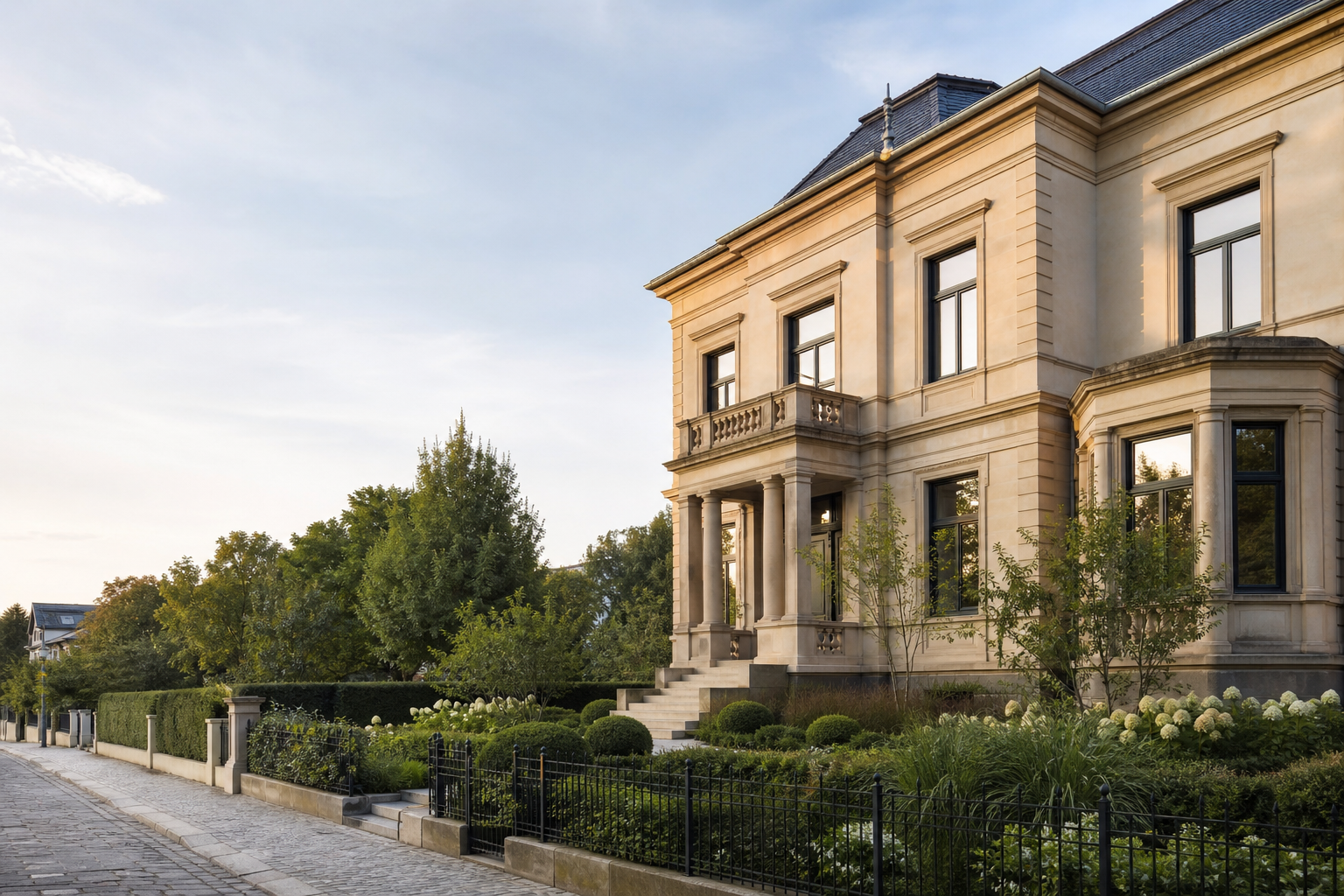
Industry-specific content answers the questions people ask before they enquire, book or visit.
Property portals provide reach but rarely communicate what makes the agency itself valuable.
Valuation, marketing and sale process are often buried behind current listings.
Generic contact forms collect too little context for a useful first response.
Photography, sequence and cropping are chosen around the company’s real offer and approved material.


The structure combines discovery, trust, practical information and a clear next step.
Elegant listings with key facts, galleries and clear status.
Valuation, preparation and marketing process.
Local expertise and personal responsibility.
Selected completed transactions with appropriate discretion.
Property type, location, condition and preferred contact.
Useful local guidance rather than generic market commentary.
People decide faster when services, location, process and contact details are easy to understand.
The page explains the services, audience and practical details that matter before someone gets in touch.
Opening hours, locations, prices, qualifications and contact details appear where visitors expect them.
On mobile, the route to a call, booking or enquiry remains readable and obvious.
Usually yes, provided the software offers a suitable integration, feed or linking option.
Selected references can build trust where publication rights and confidentiality allow it.
Not necessarily. A well-designed owner enquiry often creates a better first conversation than an unqualified automated estimate.
Send us your current website, services and available material. We will use them to shape a focused project structure.
Start an enquiry